Fall Garden Cleanup Checklist: What to Do With Your Garden Beds Before Winter
Not sure what to do with your garden beds once the harvest winds down? This fall garden cleanup checklist walks you through exactly how to put your garden to bed for winter.
There's a certain kind of quiet that settles over a garden in late fall.
The tomato cages are empty. The zucchini has finally, mercifully, stopped producing. And you're left standing there wondering if you're supposed to do something. Anything. Or just close the gate and walk away until spring.
I used to be a "walk away until spring" gardener myself.
Then one April I opened the garden gate to find last year's tomato vines still draped over the fence like sad, brown Christmas garland, my tools rusted shut, and enough overwintered squash bugs to start their own homestead.
Turns out, a little bit of fall cleanup saves you a whole lot of spring regret.
In this Farm Girl Guide, I'll walk you through exactly what to do (and what you can skip) to put your garden to bed for winter, so you start next season with healthier soil, fewer pests, and tools that actually still work.
Grab a rake, pour some coffee, and let's get this garden tucked in for its long winter nap.
🌾 Who This Guide Is For
This guide is for you if...
- 🍂 Your summer garden has officially called it quits and you're not sure what comes next.
- 🧤 You want healthier soil and fewer pests next spring without a ton of extra work.
- 🔧 Your tools have been sitting outside since roughly the Fourth of July.
- 🏡 You're working toward that steady, self-sufficient homestead rhythm, one season at a time.
- 🌱 You'd rather do a little work now than a lot of cleanup later.
If any of that sounds familiar, let's get to it.
🍂 Why Fall Garden Cleanup Matters
I get it. After a long growing season, the last thing you want to do is spend another weekend out in the garden.
But a little fall cleanup does some heavy lifting for you:
- It reduces pests and disease. Old, diseased plant material left sitting all winter gives insects and fungal spores a cozy place to overwinter, right where they can reinfect next year's crops.
- It feeds your soil. Adding compost and organic matter now gives microorganisms all winter to break it down, so your soil is richer and looser come spring.
- It saves your tools. Garden tools left out in the rain and cold don't age like a fine wine. They just rust.
- It makes spring so much easier. Nothing kills spring motivation faster than walking outside to a jungle of dead plants before you've even had your coffee.
Think of it less as "extra chores" and more as a gift to your future self.
🌾 From My Garden Gate
The year I skipped fall cleanup, I told myself I was "leaving it for the wildlife."
Really, I was just tired.
Spring me was not impressed. She spent an entire Saturday untangling dead vines from the fence while muttering things I won't repeat here. These days, I do a little bit each fall, and spring me sends her thanks.
🍁 The Fall Garden Cleanup Checklist
Here's your step-by-step checklist for putting the garden to bed. You don't have to do it all in one weekend. Cross a few things off each week and it'll barely feel like work.
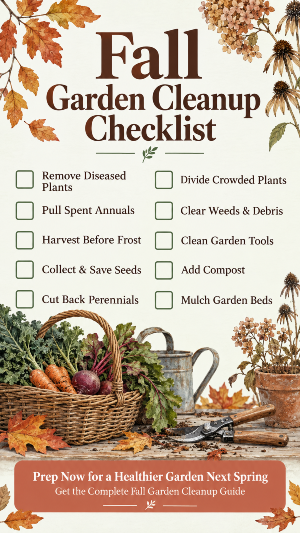
1. Pull Spent & Diseased Plants
Start by removing plants that are done producing, especially anything showing signs of disease, blight, or heavy pest damage.
Healthy plant material can go straight into the compost pile. Diseased material should go in the trash, not the compost, so you're not just relocating the problem to next year's garden.
2. Leave a Few Things Standing
Here's a fun twist: fall cleanup doesn't mean cutting every single thing down to bare dirt.
Leaving seed heads on coneflowers, black-eyed Susans, and ornamental grasses gives birds a food source through winter and gives beneficial insects a place to shelter. A little bit of "messy" is actually good for your garden's ecosystem.
3. Shred & Use Your Fall Leaves
Don't bag up those leaves and haul them to the curb. Run them over with a mower or shred them, and use them as mulch over your garden beds, or start a leaf pile for leaf mold. (I'll be sharing a full guide on leaf mold soon, because it's one of the easiest free soil amendments you'll ever make.)
4. Feed Your Soil
Your summer crops worked hard and used up plenty of nutrients along the way. Layer 2-3 inches of finished compost or well-rotted manure over your beds before winter. The microorganisms in your soil will spend the cold months slowly breaking it down, so you're not starting from scratch in spring.
5. Consider a Cover Crop
If you want to level up, planting a cover crop like clover or winter rye over empty beds naturally builds soil fertility, prevents erosion, and keeps weeds from moving into that prime real estate while you're not looking.
🐔 Chicken Interruption
I once left a bag of cover crop seed sitting open on the porch "for just a minute" while I grabbed my gloves.
By the time I got back, my hens had discovered it, and half the bag was gone. So now half my "cover crop" is actually growing in the chicken run instead of the garden. Lesson learned: seal the bag, or plan on sharing.
6. Clean & Store Your Tools
Wipe down and dry your tools, sand off any rust, and give metal parts a light coat of oil before storing them somewhere dry for winter. Your future self, reaching for a rust-free trowel in March, will thank you.
7. Protect Pots, Hoses & Raised Beds
Bring ceramic and clay pots indoors or into a shed, since they can crack in freezing temperatures. Drain and store hoses, and shut off outdoor water lines if you're in a colder climate. For raised beds, a fresh layer of mulch helps insulate the soil and protects any cold frame or cover crop you've got growing underneath.
☕ Coffee Break
If you're still harvesting cool-season crops, this is a great time to set up a cold frame over your healthiest bed instead of tearing everything out. A little bit of cleanup now, a little bit of harvest all winter later.
8. Take Notes for Next Year
Before you forget everything (and you will), jot down what worked, what didn't, and what you want to try differently next season. Your garden journal is basically a love letter to your future self.
🧺 Harvest Basket
If you only remember three things from today's visit to the garden...
- Pull diseased plants, but leave some seed heads standing for the birds.
- Feed your soil now so it's ready to work for you in spring.
- Clean and store your tools before winter, not after you go looking for them in April.
🚫 What NOT to Do This Fall
Fall cleanup is helpful, but it's easy to overdo it. A few things worth skipping:
- Don't till your soil. Tilling disrupts soil structure and the beneficial organisms living in it. A top layer of compost does more good with a lot less effort.
- Don't strip every bed completely bare. A little leaf litter and standing plant matter supports overwintering pollinators and other beneficial insects.
- Don't compost diseased material. It rarely breaks down enough to kill off the problem, and you'll just be reintroducing it next season.
- Don't rush. You have all fall to work through this list. There's no prize for finishing in one weekend (except maybe a sore back).
🤎 Just Between Us...
Somewhere along the way, gardening advice turned "clean up your garden" into "make it look like a golf course." You don't need to. A slightly messy, bird-friendly garden bed isn't a failure. It's actually doing its job.
❓ Frequently Asked Questions
When should I start my fall garden cleanup?
Anytime after your summer crops finish producing or after your first frost, whichever comes first. There's no need to rush. Working through your checklist over several weekends is perfectly fine.
Should I remove all my plants in the fall?
Not necessarily. Remove diseased or spent plants, but consider leaving some seed heads and ornamental grasses standing through winter for birds and beneficial insects.
Can I compost my dead plants?
Healthy plant material can go into the compost pile. Diseased or pest-infested plants should be thrown away instead, so you don't reintroduce the problem into next year's garden.
Do I need to till my garden in the fall?
No. Tilling can actually harm soil structure and disrupt beneficial organisms. A layer of compost or mulch on top does the job with far less effort.
What should I do with my raised beds for winter?
Clear out spent plants, add a layer of compost, and top with mulch to insulate the soil. If you want to keep growing through winter, a simple cold frame placed over a raised bed works great.
Is it too late to plant a cover crop?
It depends on your climate and first frost date, but many cover crops like winter rye can be planted well into fall. Check your average first frost date and the seed packet's planting window to be sure.
How do I protect my garden tools over winter?
Clean off soil, dry them thoroughly, sand away any rust, and apply a light coat of oil to metal parts before storing them somewhere dry until spring.
🤎 Final Thoughts
Putting the garden to bed for winter isn't about making everything perfect. It's about setting yourself, and your soil, up for an easier season next time around.
A little cleanup now means less scrambling in spring, healthier soil waiting for you, and tools that are actually ready to use when the itch to plant something hits again.
So go pull those spent tomato vines, feed your soil a little compost, and give your tools a proper goodnight. Your garden (and spring you) will be so glad you did.
Show Image
🌾 Farm Girl Next Steps
Ready to keep the season going? Here's where to head next:
- 🍂 How to Find Your First Frost Date — know exactly how much time you have left.
- 🥬 What to Plant in a Fall Garden: 25 Vegetables That Thrive in Cool Weather — fill those cleaned-up beds back up.
- 🧊 Cold Frame Gardening for Beginners — keep harvesting through the cold months.
- 🍁 Leaf Mold 101: Turn Fall Leaves Into Garden Gold (coming soon)
- 🌱 How to Save Vegetable Seeds This Fall (coming soon)
🌾 Until Next Time...
Keep tending, keep tucking things in, and keep making homemade happiness.
Because every good spring garden starts with a little love in the fall.


🍓 Let’s Stay Connected
If you love simple, homemade, from-scratch goodness, you’ll fit right in here.
I share freeze drying tips, zero waste kitchen ideas, and all the little farm girl fixin’s along the way 👩🏻🌾
💛 Join me on Facebook
🎥 Watch on YouTube
🌿 Follow along on TikTok
📌 Save ideas on Pinterest
🛒 Shop my Amazon favorites
✉️ Grab my free kitchen tips + join my list
Just a little heads up, friend...some of the links on this page may be affiliate links. That means if you grab something through them, I may earn a small commission (at no extra cost to you). It’s basically like you buying me a coffee while I share all my favorite cozy kitchen finds with you. I only ever recommend what I truly love and use myself.