Leaf Mold 101: Turn Fall Leaves Into Garden Gold
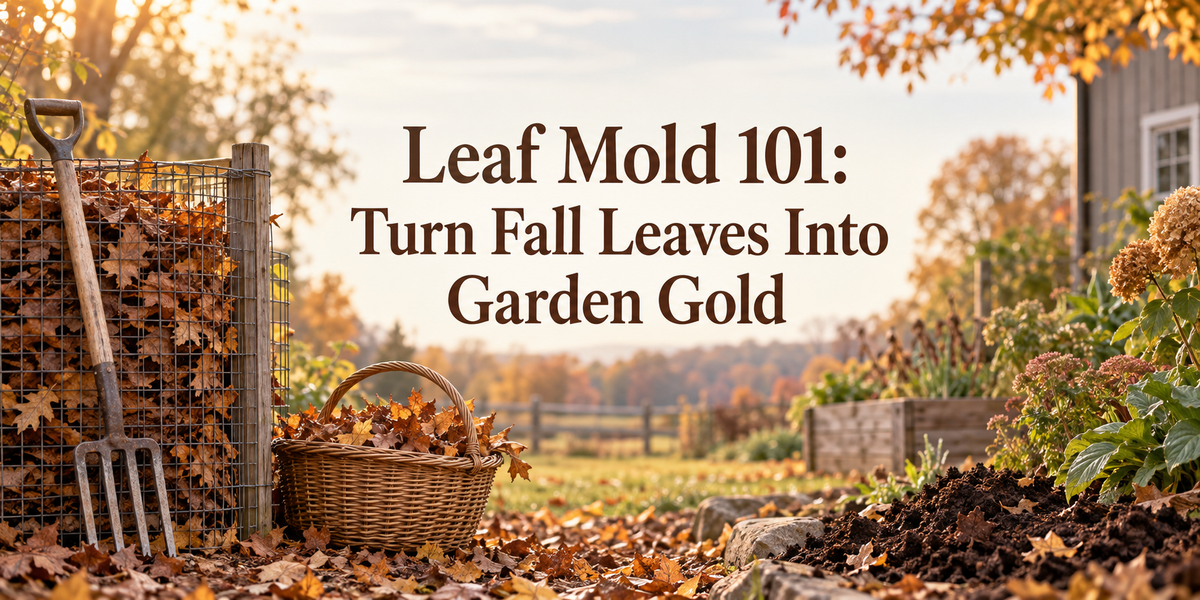
If you've got a yard full of trees, you already know the fall routine: rake, bag, repeat, curse your neighbor's oak tree. But before you drag one more bag to the curb, let me introduce you to the laziest, cheapest soil amendment in all of gardening — leaf mold.
Leaf mold is exactly what it sounds like: leaves, left alone, until they turn into a dark, crumbly, sweet-smelling material that your garden beds will absolutely lose their minds over.
No bin tumbling, no turning, no fussing with brown-to-green ratios like you're baking a soufflé. Just leaves, time, and a little patience. If regular compost is the honor-roll student of the garden world, leaf mold is its chill younger sibling who somehow still gets straight A's.
This is basically leaf compost without the drama — and once you make your first batch, you'll wonder why you ever bagged a single leaf for the trash truck.
📋 What's In This Post
What Exactly Is Leaf Mold?
Leaf mold is fully decomposed leaves — nothing else added. While traditional composting relies on a mix of "greens" (kitchen scraps, grass clippings) and "browns" (dry leaves, cardboard) to heat up fast, leaf mold skips all that. It's a slow, cool, fungal-driven breakdown instead of the hot, bacterial breakdown you get in a compost pile. Basically, it's what happens naturally on a forest floor every single autumn — you're just borrowing the leaves before Mother Nature gets to them.
The result is a soil conditioner that's less about feeding your plants and more about feeding your soil. Think improved structure, better moisture retention, and a spongy, rich texture that makes garden beds noticeably happier.
Why Bother? The Benefits of Leaf Mold
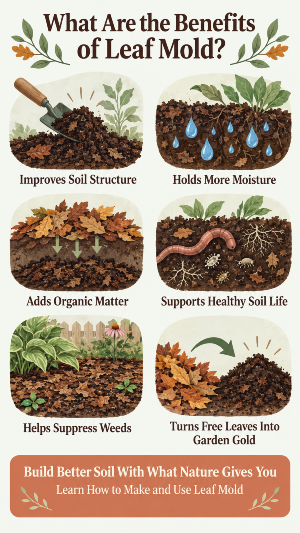
- It's basically free garden gold. You're using a "waste" product that would otherwise end up in a landfill bag at the curb.
- It's a moisture magnet. Leaf mold can hold several times its weight in water, which means less watering for you come summer.
- It loosens heavy soil. Got clay soil that turns into a brick in August? Leaf mold helps break it up.
- It feeds the good guys. Earthworms and beneficial soil microbes treat leaf mold like an all-you-can-eat buffet, which keeps your soil ecosystem thriving.
- It suppresses weeds when used as a top mulch, and insulates plant roots through the cold months.
It won't out-nutrient a well-made batch of garden compost — for that, compost still wins — but for soil texture and moisture, leaf mold is the underrated MVP.
How to Make Leaf Mold: The Bin Method
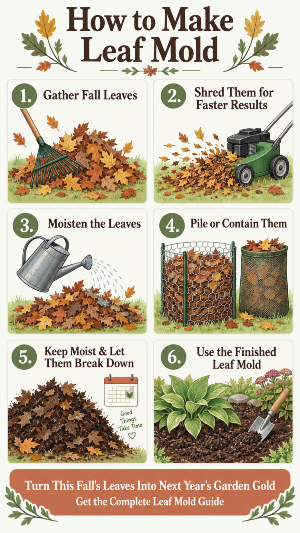
You don't need anything fancy here. A simple wire cage, a few stakes and some chicken wire, or even a heavy-duty trash bag with holes poked in it will all work as a leaf mold bin.
What you'll need:
- A pile of fall leaves (any kind, though smaller leaves like maple break down faster than tough ones like oak)
- Wire fencing, hardware cloth, or a large bin to contain the pile
- A shady, out-of-the-way corner of the yard
- Water (if your climate runs dry)
The steps:
- Shred your leaves if you can. Running a mower over them first speeds up decomposition significantly — whole leaves can take up to two years, shredded leaves can be ready in under one.
- Build your bin. Roll wire fencing into a cylinder, or stake out a simple square enclosure. Keep the bottom open to bare soil so worms and microbes can migrate up into the pile.
- Pile in the leaves. Fill it up — leaves compact quite a bit as they break down, so don't be shy.
- Dampen the pile. Leaf mold needs consistent moisture to decompose, so give it a good soak, especially in dry spells.
- Find it a shady spot. Full shade helps the pile hold moisture instead of drying out.
- Walk away. Seriously. Unlike a hot compost pile, leaf mold doesn't need turning. Check on it occasionally, water if it's bone dry, and let time do the work.
In about 6–12 months for shredded leaves (or up to two years for whole ones), you'll have dark, crumbly leaf mold ready for the garden.
Leaf Mold vs. Compost: What's the Difference?
People mix these up constantly, so let's clear it up:
| Leaf Mold | Compost | |
|---|---|---|
| Ingredients | Leaves only | Greens + browns |
| Process | Cool, fungal decomposition | Hot, bacterial decomposition |
| Effort | Pile it and forget it | Needs turning, moisture, ratio balance |
| Time | 6 months–2 years | Weeks to a few months |
| Best for | Soil structure, moisture retention | Nutrient boost |
Honestly? You don't have to choose. A lot of us run a compost bin and a leaf pile side by side — compost for the nutrients, leaf mold for the texture. They're not competitors, they're garden co-workers.
A Few Tips From the Trenches
- Skip the black walnut leaves. They contain juglone, a compound that's toxic to many plants and can linger even after decomposition.
- Mix leaf types when you can. A blend of leaves breaks down more evenly than an all-oak pile.
- No fancy bin? No problem. A few contractor bags with drainage holes poked in the sides work in a pinch — just check moisture levels since bags dry out unevenly.
- Use it two ways: as a soil amendment mixed into beds and containers, or as a mulch layered right on top of the soil.
The Bottom Line
Leaf mold might just be the most underrated trick in the whole garden playbook — free, low-effort, and genuinely transformative for tired soil. So this year, instead of bagging up every leaf that falls, set a little pile aside. Future-you, standing in a garden bed that finally holds moisture like it's supposed to, will send present-you a very grateful text.


🍓 Let’s Stay Connected
If you love simple, homemade, from-scratch goodness, you’ll fit right in here.
I share freeze drying tips, zero waste kitchen ideas, and all the little farm girl fixin’s along the way 👩🏻🌾
💛 Join me on Facebook
🎥 Watch on YouTube
🌿 Follow along on TikTok
📌 Save ideas on Pinterest
🛒 Shop my Amazon favorites
✉️ Grab my free kitchen tips + join my list
Just a little heads up, friend...some of the links on this page may be affiliate links. That means if you grab something through them, I may earn a small commission (at no extra cost to you). It’s basically like you buying me a coffee while I share all my favorite cozy kitchen finds with you. I only ever recommend what I truly love and use myself.