
Indoor Herb Garden Ideas: Simple Windowsill & Mason Jar Setups for Winter
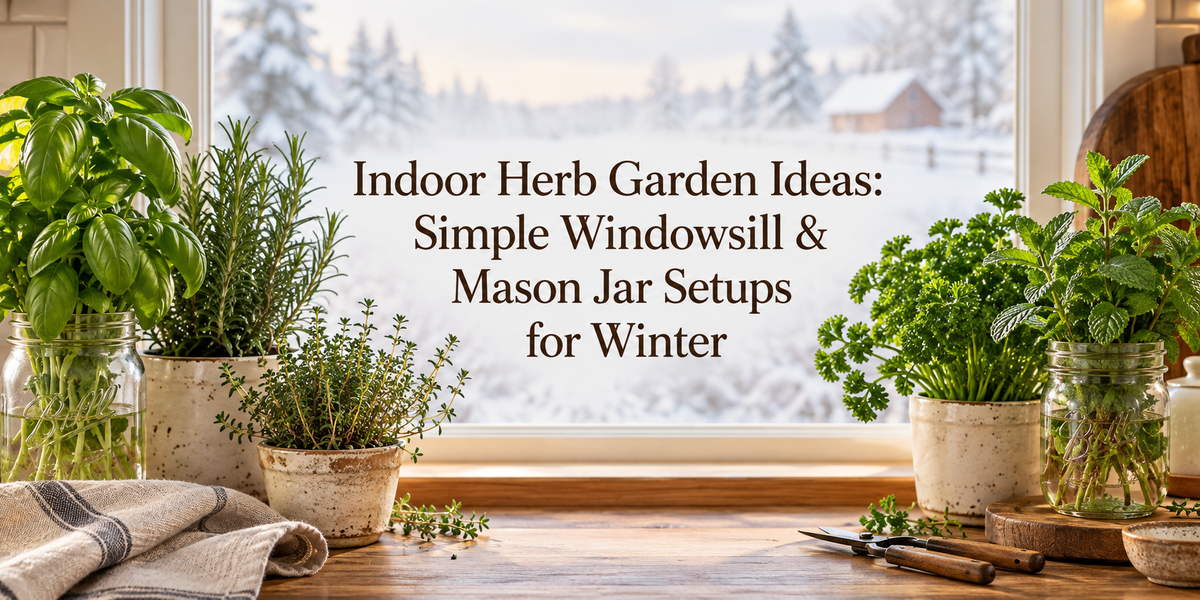
There's a particular kind of quiet that settles over a farmhouse kitchen in January — the garden's asleep, the seed catalogs haven't shown up yet, and you're stuck staring out a frosty window wondering when you'll get your hands back in the dirt.
An indoor herb garden is the answer. It's small enough to start this weekend, it doesn't care that it's twenty degrees outside, and by next week you'll be snipping fresh basil for supper instead of reaching for the dried stuff in the back of the pantry.
Why an Indoor Herb Garden Is the Coziest Way to Get Through Winter
If you've been searching for indoor herb garden ideas, a windowsill herb garden that actually looks nice, or just an easy indoor herb garden for beginners, you're in the right place.
A kitchen herb garden indoor doesn't need to be complicated — it just needs a bright spot, the right herbs, and a container that drains well.
Below you'll find the best herbs to grow, a simple windowsill herb garden setup, a featured mason jar version, and a short list of layout ideas — not a giant overwhelming list, just enough to help you pick one and actually start this week.
🌿 Table of Contents
Grab your favorite mug of tea and stay awhile — here's everything we'll cover together...
The Best Herbs for an Indoor Herb Garden
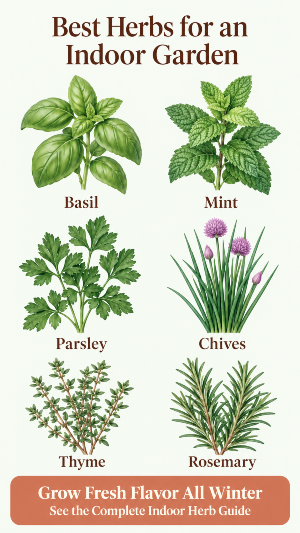
Before you pick a container, it helps to know which herbs actually do well indoors. These are the easiest herbs for an indoor herb garden, especially if this is your first one:
Basil — loves warmth and bright light; keep it away from cold drafts
Mint — nearly impossible to kill, so give it its own pot (it spreads)
Chives — tolerant of lower light than most herbs, great for beginners
Thyme — low-water, forgiving, and slow-growing indoors
Rosemary — needs the sunniest window you have and good drainage
Parsley — steady grower, good in a shared pot with chives
Oregano — thrives in bright light, similar needs to thyme
Sage — a little slower indoors but very forgiving of missed waterings
Cilantro — fast-growing but short-lived; succession plant every few weeks
Lemon balm — vigorous grower, great for tea
How to Set Up a Windowsill Herb Garden
A windowsill herb garden is the simplest version of an indoor herb garden to start, and it's a great option if you don't want to build anything or find extra floor space. Here's what actually matters:
Pick a bright window — south- or west-facing gets the most light through winter; that's the single biggest factor in whether a window herb garden indoor setup thrives or struggles.
Choose containers with drainage — or add a layer of small pebbles to the bottom of a container that doesn't have a drainage hole, so roots aren't sitting in standing water.
Use a well-draining potting mix — regular garden soil compacts indoors and holds too much moisture; a bagged potting mix works much better.
Group herbs by water needs — basil, parsley, and chives like consistent moisture; rosemary, thyme, and sage prefer to dry out between waterings. Keep each group together.
Water lightly and check first — stick a finger in the soil before watering; overwatering is the most common reason a windowsill herb garden fails.
Featured: Mason Jar Herb Garden Setup
If you only try one indoor herb garden setup from this whole post, make it this one.
A mason jar herb garden indoor is inexpensive, endlessly customizable, and it fits the farmhouse look most of us are already going for in the kitchen.
Pick the right jars — wide-mouth pint jars are the sweet spot for most herbs; half-pint jars work for shallow-rooted herbs like thyme or chives on a narrow sill. It's also the easiest way to reuse jars leftover from canning season.
Solve the drainage problem first — mason jars don't have drainage holes, so add about an inch of small pebbles or river rocks to the bottom of each jar before the soil.
Style it — chalkboard labels or twine-wrapped tags on each jar keep you from mixing up your basil and your oregano, and pull the whole windowsill together.
Quick Tip: Avoid Root Rot in Jars — that drainage-safe method (a layer of pebbles before the soil) keeps roots from sitting in standing water, which is the single biggest reason herbs grown in mason jars die early.
12 Indoor Herb Garden Layout Ideas
Once you've got the basics down, here are 12 indoor herb garden ideas to help you pick a layout that fits your kitchen, your budget, and how much time you want to spend on it.
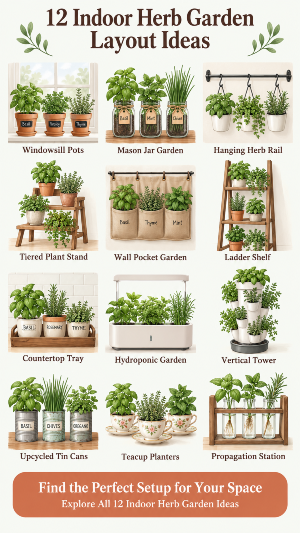
- Windowsill Herb Garden Row — the classic: one straight row of pots or jars right on the sill.
- Mason Jar Herb Garden — the featured setup above, lined up in a single row.
- Three-Tier Wooden Herb Stand — a tiered plant stand tucked against the window for light on every level.
- Terracotta Pot Herb Garden — the timeless choice; terracotta's natural porousness helps prevent overwatering.
- Hanging Mason Jar Herb Garden — jars suspended in wire hangers along the top of the window frame when counter space is nonexistent.
- Suction-Cup Window Herb Shelf — a small glass shelf that attaches directly to the window, ideal for an apartment herb garden with zero wall damage.
- Under-Cabinet Herb Garden — herbs tucked on the counter just under an upper cabinet, borrowing light from a nearby window.
- Tin Can Herb Planters — cleaned, painted tin cans with drainage holes punched in the bottom; a nearly free way to start.
- Teacup Herb Garden — mismatched vintage teacups for a cottagecore-leaning look.
- Floating Shelf Herb Garden Above the Sink — a single floating shelf mounted just above sink height, out of the splash zone but still in reach.
- Vertical Pocket Planter Herb Wall — a fabric or felt pocket organizer mounted beside the window, each pocket holding one herb.
- Kitchen Cart Herb Garden — a small rolling cart near the brightest window, perfect for renters or a tiny kitchen.
How to Care for Your Indoor Herb Garden
Once your setup is in place, keeping an indoor herb garden alive comes down to a few basics:
Light — most culinary herbs want at least 6 hours of direct light; south-facing is best, west-facing is a good second choice.
Water — check soil moisture with a finger before watering; overwatering is the most common way an indoor herb garden setup fails.
Airflow — leave a little space between pots so air can circulate and prevent mildew, especially in a humid kitchen.
Harvesting — snip from the top down and never take more than a third of the plant at once, so it keeps producing all winter.
Rotate — give the jars or pots a quarter turn every few days so growth stays even instead of leaning hard toward the glass.
Final Thoughts
An indoor herb garden is one of the easiest ways to keep your hands busy and your kitchen a little greener while the rest of the garden rests for winter.
Whether you start with a simple windowsill herb garden, the mason jar version above, or one of the 12 layout ideas, the goal is the same: fresh herbs within reach, all season long.
If you give it a try, I'd love to see it — tag your indoor herb garden setup so I can see how it turned out, and pin this for later so you've got it saved for when you're ready to start.


🍓 Let’s Stay Connected
If you love simple, homemade, from-scratch goodness, you’ll fit right in here.
I share freeze drying tips, zero waste kitchen ideas, and all the little farm girl fixin’s along the way 👩🏻🌾
💛 Join me on Facebook
🎥 Watch on YouTube
🌿 Follow along on TikTok
📌 Save ideas on Pinterest
🛒 Shop my Amazon favorites
✉️ Grab my free kitchen tips + join my list
Just a little heads up, friend...some of the links on this page may be affiliate links. That means if you grab something through them, I may earn a small commission (at no extra cost to you). It’s basically like you buying me a coffee while I share all my favorite cozy kitchen finds with you. I only ever recommend what I truly love and use myself.