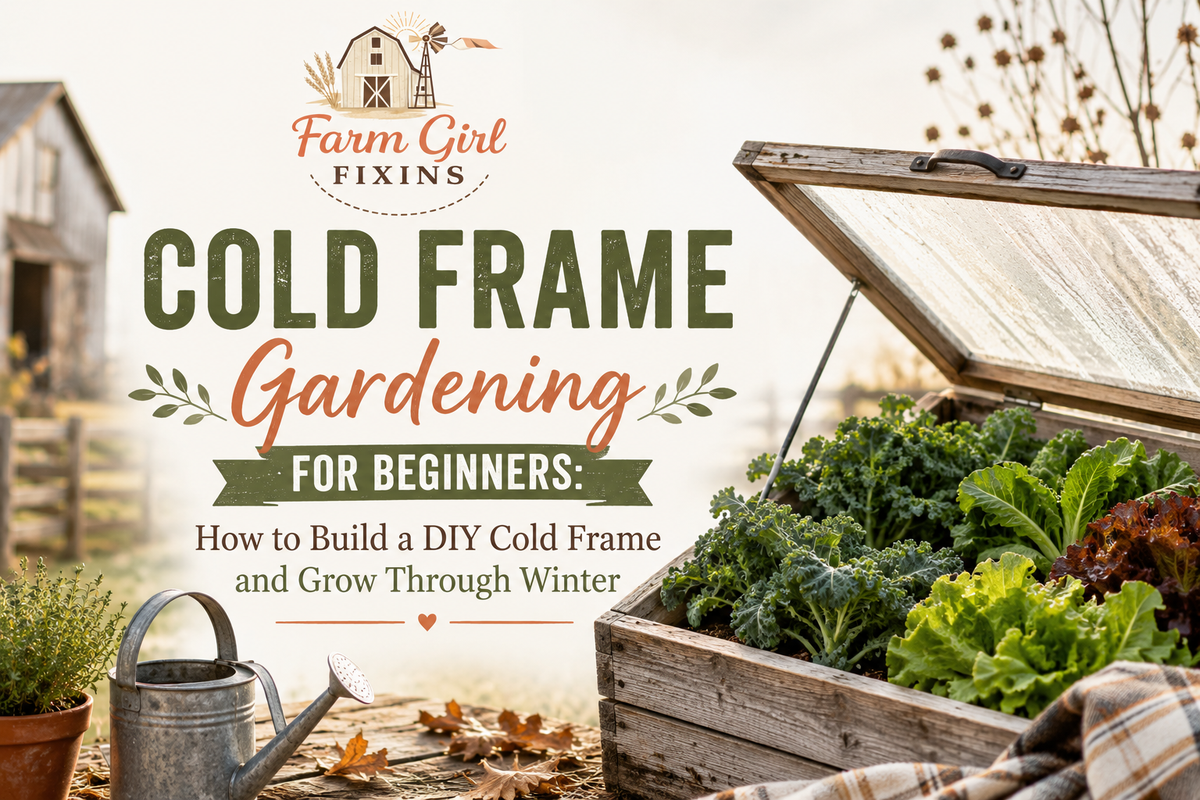
Cold Frame Gardening for Beginners: How to Build a DIY Cold Frame and Grow Through Winter
Stretch your harvest all winter long. Learn how to build a simple DIY cold frame, what to grow in it, and how cold frame gardening works for beginners.
There's a moment every fall gardener eventually has, usually while standing in a half-empty garden bed holding a bag of kale seeds, wondering if it's too late.
Spoiler alert: it's not.
It just means you might need a little help from a cold frame.
If you've spent any time on Pinterest lately, you've probably scrolled past a dozen pins of cute little glass-topped boxes tucked up against someone's raised beds, looking like a mini greenhouse that skipped leg day. That's a cold frame, and it might just be the cheapest, easiest way to keep growing food long after your neighbors have packed it in for the season.
I'll admit, the first time I heard "cold frame," I pictured something complicated. Something with a permit involved.
Turns out, it's basically a box with a lid. A gardener in overalls could build one out of stuff sitting in the garage right now, and by the end of this guide, you'll know exactly how.
In this Farm Girl Guide, I'll walk you through what a cold frame actually is, why it might be the most underrated tool in your fall garden, a handful of DIY cold frame plans anyone can build, what to grow in it, and how to keep the whole thing happy through the cold months ahead.
Grab your coffee. This one's for the gardeners who aren't ready to say goodbye to fresh vegetables just because it's getting chilly outside.
🌾 Who This Guide Is For
This guide is for you if...
- 🧊 You've never built a cold frame and have no idea where to start.
- 🥬 You want to keep harvesting greens after your neighbors have given up.
- 🔨 You'd rather build something cheap out of scrap wood than buy a fancy greenhouse kit.
- 🌱 You're tired of watching frost take out seedlings you worked hard to grow.
- 🏡 You're chasing that self-sufficient, grow-it-yourself life one cheap DIY project at a time.
If any of that sounds like you, go ahead and pour a second cup. We've got some building to do.
🧊 What Is a Cold Frame?
A cold frame is basically a bottomless box with a clear, slanted lid that sits directly over your garden bed and traps heat from the sun.
That's it. That's the whole invention.
No electricity. No heater. No monthly subscription fee. Just sunlight, glass (or plastic), and a little bit of trapped warmth doing all the heavy lifting.
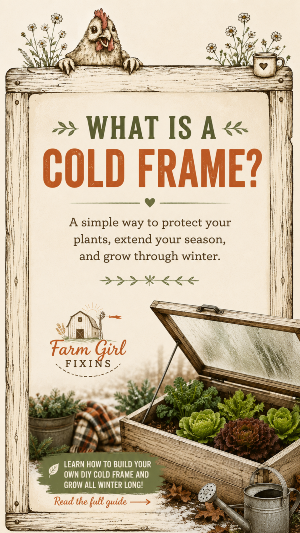
Think of it as a mini unheated greenhouse, except it's small enough to build in an afternoon and cheap enough that you won't cry if a windstorm knocks the lid off. (Ask me how I know.)
The sides of a cold frame trap heat during the day, and the slanted, clear top lets sunlight in while holding that warmth close to your plants overnight. It can raise the temperature inside anywhere from 5 to 20 degrees warmer than the air outside, which is often just enough to keep cool-season crops growing weeks (sometimes months) longer than they would out in the open.
It won't turn your backyard into Florida. But it doesn't need to. It just needs to buy your lettuce a little more time.
🌾 From My Garden Gate
The first cold frame I ever built was an old window I dragged home from a garage sale for three dollars, propped up on cinder blocks over a raised bed.
It looked like something a raccoon assembled.
But that ugly little box kept my spinach alive through two hard frosts that killed everything else in the yard, and that was the moment I became a cold frame believer. Function over fashion, friends. Function over fashion.
🌱 Cold Frame vs. Greenhouse vs. Row Cover
If you've been down the Pinterest rabbit hole of homemade greenhouses, small greenhouse ideas, and backyard greenhouse plans, you might be wondering how a cold frame is any different or if you even need one versus the other.
Here's the short version.
| Season Extender | Cost | Best For | Heated? |
|---|---|---|---|
| Cold Frame | $ (often free with scrap materials) | Cool-season crops, hardening off seedlings, extending fall harvest | No |
| Row Cover / Frost Cloth | $ | Quick overnight frost protection | No |
| Simple/DIY Greenhouse | $$–$$$ | Season-round growing, starting seeds, tender plants | Sometimes |
| Full Greenhouse | $$$–$$$$ | Year-round growing in any climate | Usually |
A cold frame is the gateway drug of season extenders. It's smaller and cheaper than a greenhouse, sturdier than a floating row cover, and it does one job extremely well: protecting the plants already growing in your garden bed from the worst of the cold.
If a greenhouse is a whole extra room on your house, a cold frame is more like a really good coat.
🥬 What to Grow in a Cold Frame This Fall & Winter
The good news is that a cold frame is tailor-made for the same cool-season vegetables I talked about in What to Plant in a Fall Garden. You're not learning a whole new set of crops here. You're just giving the ones you already love a warmer coat to wear.
| Vegetable | Cold Frame Friendly? | Farm Girl Notes |
|---|---|---|
| Spinach | Excellent | Practically built for this. Will often overwinter. |
| Kale | Excellent | Gets sweeter the colder it gets. |
| Lettuce | Excellent | Harvest a few leaves at a time all season. |
| Carrots | Very Good | Leave them in and harvest as needed — free cold storage. |
| Radishes | Very Good | Fast enough to sneak in multiple rounds. |
| Swiss Chard | Very Good | Keeps producing long past when it "should." |
| Arugula | Excellent | Stays tender instead of turning bitter. |
| Green Onions | Very Good | Low maintenance, high reward. |
| Herbs (parsley, cilantro) | Good | A cold frame can keep fresh herbs going well past frost. |
🍂 Did You Know?
A cold frame doesn't just protect fall crops from frost, it's also one of the best ways to jump-start spring seedlings weeks before you'd normally be able to plant outside. Hardening off transplants in a cold frame instead of on a windowsill saves them (and you) a lot of stress.
🔨 How to Build a DIY Cold Frame (4 Simple Plans)
Here's the part where I remind you that a cold frame does not need to look like it belongs on a magazine cover. It needs to keep cold air out and sunlight in. That's it. Everything past that is just decorating.
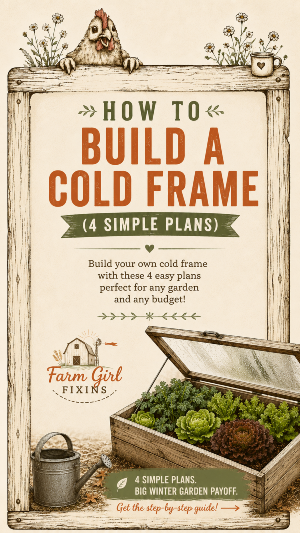
Below are four DIY cold frame plans ranging from "I found this in the garage" to "I actually bought a few boards."
1. The Classic Old Window Cold Frame
This is the OG cold frame, and it's still my favorite.
What you need:
- An old window or glass door (garage sales, salvage yards, and Facebook Marketplace are goldmines)
- 4 pieces of untreated lumber or cinder blocks to build the walls
- Hinges (optional, but handy for propping the lid open)
Build a simple box slightly smaller than your window, angle the back wall taller than the front so rain and snow slide off, and set the window on top as your lid. Done. You've built a cold frame.
2. Raised Bed Cold Frame
If you already have a raised garden bed, you're most of the way there already.
Simply build a mini frame that sits on top of your existing bed and top it with clear plastic sheeting, an old storm window, or a polycarbonate panel. This is one of the most popular searches I found while researching this post (hello, raised bed cold frame), and it's popular for a reason. No new bed to build, just a lid for the one you've already got.
3. Straw Bale Cold Frame
This one is for my fellow "I do not want to build anything with tools right now" gardeners.
Stack straw bales around your bed in a rectangle, and lay an old window or a sheet of clear greenhouse plastic across the top. The straw insulates beautifully, and when spring comes, it breaks down right into your compost. Structure and soil amendment in one. Not bad for stacking some hay.
4. Budget Pallet Cold Frame
Pallet greenhouses and pallet cold frames show up all over Pinterest, and for good reason — free wood is free wood.
Break down a wooden pallet for the frame, use plastic sheeting or an old window for the lid, and you've built something sturdy enough to survive a season for the cost of a few screws.

I once left an unfinished cold frame leaning against the coop overnight, fully intending to finish it "tomorrow."
By morning, my hens had decided it made an excellent roosting ramp, several screws were missing, and one very smug rooster was standing on top of it like he'd built it himself.
Moral of the story: finish the project the same day, or the chickens will finish it for you. Their way. Not yours.

Whatever cold frame plan you choose, make sure the lid can prop open. On a sunny fall afternoon, even 40-degree air outside can turn into a sauna under glass, and nobody wants to steam their spinach before it even makes it to dinner.
☀️ Where to Put Your Cold Frame
Placement makes or breaks a cold frame, and it comes down to the same microclimates I talked about in my First Frost Guide.
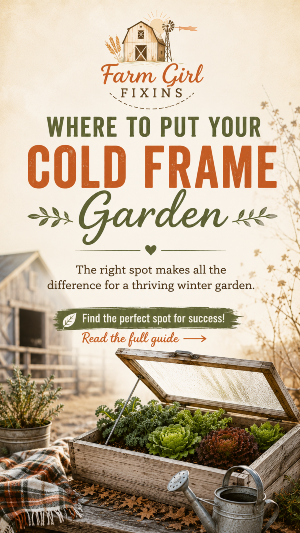
For best results, look for:
- South-facing exposure — this catches the most sun throughout the day, especially as the sun sits lower in the sky come fall and winter.
- A spot sheltered from wind — along a fence, wall, or hedge helps hold in warmth and keeps the lid from turning into a kite.
- Good drainage — a cold frame sitting in a low, soggy spot is just an expensive way to grow mud.
- Easy access — you'll be opening and closing this thing often, so don't tuck it somewhere you have to climb over three other garden beds to reach.
🤎 Just Between Us...
My first cold frame was in a great sunny spot with one small flaw: it was nowhere near a hose. By January, I was hauling water across the yard in a coffee can because I didn't want to walk back to the house. Learn from me. Put it somewhere convenient, not just somewhere sunny.
🌡️ Cold Frame Care: Venting, Watering & Watching the Weather
Building the cold frame is honestly the easy part. Keeping your plants happy inside it is where a little routine goes a long way.
Vent it on sunny days. This is the single most common cold frame mistake. Prop the lid open a few inches (or all the way) whenever temperatures climb above 40–45°F, even in winter. Otherwise, you'll accidentally cook your greens instead of protecting them.
Close it back up before nightfall. Trap that daytime warmth in before the temperature drops after sunset.
Water sparingly. Plants growing in cooler temperatures need much less water than they did in summer. Check the soil before watering, and avoid watering late in the day when things are about to cool down.
Watch for condensation. A little fog on the inside of the lid is normal. A lot of moisture dripping everywhere means it's time to vent it out for a bit.
Add extra insulation on the coldest nights. An old blanket, towel, or frost cloth draped over the lid during a hard freeze can buy your plants a few extra degrees of protection.
🧺 Harvest Basket
If you only remember three things from today's visit to the porch...
- A cold frame is just a box with a clear lid that traps heat — no electricity required.
- Vent it on sunny days so you don't accidentally roast what you're trying to protect.
- Cool-season crops like spinach, kale, and carrots are basically made for cold frame living.
❓ Frequently Asked Questions
What is cold frame gardening?
Cold frame gardening is the practice of growing cool-season vegetables inside a simple, unheated box topped with a clear lid that traps the sun's warmth. It's used to extend the growing season into fall and winter, and to get a head start on spring planting.
How much warmer is a cold frame than outside?
How much warmer is a cold frame than outside?
Do I need to heat my cold frame?
No. That's the whole appeal of a cold frame versus a greenhouse. It relies entirely on trapped sunlight, no electricity or heat source required.
Do I need to heat my cold frame?
No. That's the whole appeal of a cold frame versus a greenhouse. It relies entirely on trapped sunlight, no electricity or heat source required.
What can you grow in a cold frame during winter?
Cold-hardy crops like spinach, kale, lettuce, arugula, Swiss chard, carrots, radishes, and green onions all do well in a cold frame through the colder months, especially in milder climates.
What can you grow in a cold frame during winter?
Cold-hardy crops like spinach, kale, lettuce, arugula, Swiss chard, carrots, radishes, and green onions all do well in a cold frame through the colder months, especially in milder climates.
What's the difference between a cold frame and a greenhouse?
A cold frame is smaller, unheated, and sits directly over an existing garden bed, while a greenhouse is a larger, walk-in structure that's sometimes heated and used for year-round growing. A cold frame is the budget-friendly, beginner-friendly little cousin of the greenhouse.
Can I build a cold frame for free?
Often, yes. Old windows, scrap lumber, straw bales, and even broken-down pallets can all be repurposed into a functional cold frame without spending much (or anything) at all.
How big should a DIY cold frame be?
There's no magic size. Many gardeners build theirs to fit an existing raised bed or a salvaged window they already have on hand. A common beginner size is around 3 feet by 4 feet, tall enough in the back to fit taller crops like Swiss chard.
Can a cold frame be used in summer too?
Yes! Once the growing season heats back up, a cold frame can double as a way to harden off seedlings before transplanting them into the garden, or to protect delicate seedlings from harsh sun and wind.
🤎 Final Thoughts
A cold frame isn't going to turn your backyard into a year-round farm, and it doesn't need to.
What it will do is buy you a few more weeks (or months) of fresh spinach, sweeter carrots, and the small, stubborn satisfaction of harvesting something green while everyone else's garden has already gone to sleep for the winter.
It's a cheap box. With a lid. That happens to be one of the most useful things you'll ever build in your garden.
So dig that old window out of the garage, grab some scrap lumber, and build something a little rough around the edges. Your spinach won't judge you for it. Neither will I.

🍓 Let’s Stay Connected
If you love simple, homemade, from-scratch goodness, you’ll fit right in here.
I share freeze drying tips, zero waste kitchen ideas, and all the little farm girl fixin’s along the way 👩🏻🌾
💛 Join me on Facebook
🎥 Watch on YouTube
🌿 Follow along on TikTok
📌 Save ideas on Pinterest
🛒 Shop my Amazon favorites
✉️ Grab my free kitchen tips + join my list
🌾 Farm Girl Next Steps
Ready to keep the season going? Here's where to head next:
- 🍂 How to Find Your First Frost Date — figure out exactly how much time you have left.
- 🥬 What to Plant in a Fall Garden: 25 Vegetables That Thrive in Cool Weather — fill your cold frame with the right crops.
- 🌱 The Ultimate Fall Garden Guide for Beginners — your full roadmap for the season.
- ❄️ Fall Garden Cleanup Checklist (coming soon)
- 🌿 How to Save Vegetable Seeds This Fall (coming soon)
🌾 Until Next Time...
Keep building, keep growing, and keep making homemade happiness.
Because sometimes the most useful thing in your whole garden is a box you built out of stuff you already had lying around.
I can't wait to see what you grow under that lid.