What Are the Best Vanilla Beans for Homemade Extract?
Discover the best vanilla beans for homemade extract, including Madagascar, Ugandan, Tahitian, Comoros, Grade A, Grade B, and vanilla bean splits. Learn how to choose the right beans for rich, flavorful homemade vanilla extract.
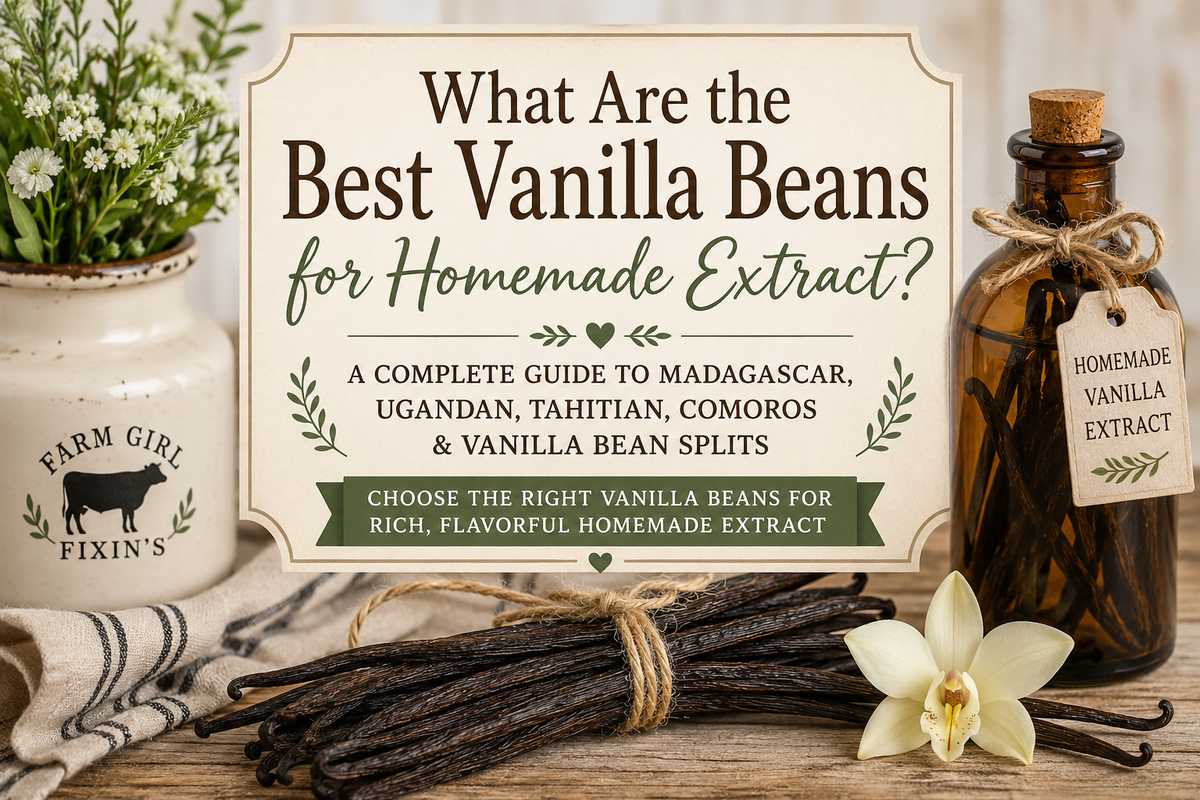
A Complete Guide to Madagascar, Ugandan, Tahitian, Comoros & Vanilla Bean Splits
If you've ever shopped for vanilla beans online, you've probably found yourself staring at dozens of options and wondering which ones are actually worth buying. Madagascar vanilla beans, Ugandan vanilla beans, Tahitian vanilla beans, Comoros vanilla beans, Grade A beans, Grade B beans, and even vanilla bean splits all claim to be the best choice for homemade vanilla extract.
So which vanilla beans should you choose?
The truth is that there isn't one perfect vanilla bean for everyone. Each variety has its own unique flavor profile, aroma, and characteristics that can influence the taste of your homemade vanilla extract. Some beans produce the rich, classic vanilla flavor most people know and love, while others create floral, fruity, creamy, or even chocolate-like notes.
Inside, we'll compare the most popular vanilla bean varieties, discuss the differences between Grade A and Grade B beans, explain why vanilla bean splits have become a favorite among experienced vanilla makers, and help you decide which vanilla beans are best for your next batch of homemade extract.
Whether you're making your very first jar or you're ready to experiment with different flavor profiles, this guide will help you confidently choose the right vanilla beans for the job.
Table of Contents
- Who This Is For
- What Makes a Great Vanilla Bean?
- Grade A vs Grade B vs Vanilla Bean Splits: What's the Difference?
- Madagascar Vanilla Beans
- Ugandan Vanilla Beans
- Tahitian Vanilla Beans
- Comoros Vanilla Beans
- Which Vanilla Beans Are Best for Homemade Extract?
- Best Vanilla Beans for Beginners
- Can You Mix Vanilla Bean Varieties?
- Frequently Asked Questions
- Final Thoughts
Who This Is For
This guide is for vanilla lovers, home bakers, homesteaders, gift makers, and anyone interested in making homemade vanilla extract. Whether you're purchasing your very first vanilla beans or looking to experiment with different varieties, you'll learn how flavor profiles, bean grades, and bean origins can impact your finished extract.
What Makes a Great Vanilla Bean?
When people start making homemade vanilla extract, one of the first questions they ask is:
"What are the best vanilla beans?"
The answer is a little more complicated than simply choosing the most expensive bean available.
A great vanilla bean should have:
- Strong aroma
- Good oil content
- Rich flavor compounds
- Proper curing
- Freshness
The origin of the bean matters, but how it was grown, harvested, and cured matters just as much.
Think of vanilla beans like coffee beans or wine grapes. Different growing regions create different flavor profiles, and each variety brings something unique to the table.
Grade A vs Grade B vs Vanilla Bean Splits: What's the Difference?
Before comparing bean varieties, it's important to understand the different grades.
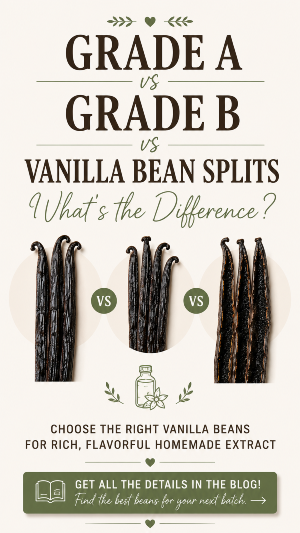
Grade A Vanilla Beans
Grade A beans are often called gourmet beans.
These beans are:
- Moist
- Plump
- Flexible
- Higher moisture content
- Beautiful appearance
Grade A beans are commonly used in baking, desserts, vanilla bean paste, and recipes where the bean itself is visible. Their plump, beautiful appearance makes it aesthetically pleasing and is a top choice if you're gifting or selling your extract.
They're gorgeous, but they're also usually more expensive so keep that tucked in the back of your mind.
Grade B Vanilla Beans
Grade B beans contain less moisture and are traditionally marketed for extract making.
They are:
- Drier
- Less expensive
- Highly concentrated
- Excellent for homemade extract
For years, Grade B beans were considered the gold standard for extract makers because you're paying for flavor rather than moisture.
Vanilla Bean Splits
Now let's talk about one of the best-kept secrets in the vanilla world.
Vanilla bean splits are vanilla beans that naturally split open during the curing process.
Many vanilla enthusiasts specifically seek out splits because:
- They're often more affordable
- They contain the same flavor compounds
- The seeds are already exposed
- More surface area contacts the alcohol
Because the bean is already open, extraction begins immediately.
Personally, if you're making homemade vanilla extract and can find quality splits, they are often one of the best values available.
Madagascar Vanilla Beans
Madagascar vanilla beans are often considered the gold standard of vanilla and is what's used to make the traditional vanilla extract that you buy in the store.
When most people think of vanilla flavor, they're thinking of Madagascar vanilla.
Flavor Profile
- Rich
- Creamy
- Sweet
- Traditional vanilla flavor
Best For
- Homemade vanilla extract
- Vanilla bean paste
- Vanilla sugar
- Cakes
- Cookies
- Everyday baking
If you're making your first batch of extract, Madagascar beans are almost always a safe choice.
Ugandan Vanilla Beans
Ugandan vanilla beans offer a deeper, bolder flavor profile.
Flavor Profile
- Rich
- Earthy
- Chocolate-like
- Robust
Best For
- Brownies
- Chocolate desserts
- Coffee recipes
- Homemade extract
Many vanilla lovers describe Ugandan vanilla as having more depth than Madagascar.
If you enjoy bold flavors, these beans are worth exploring.
Tahitian Vanilla Beans
Tahitian vanilla is completely different from the traditional Madagascar flavor profile.
Flavor Profile
- Floral
- Fruity
- Cherry-like
- Delicate
Best For
- Ice cream
- Custards
- Cheesecake
- Fruit desserts
- Whipped cream
Tahitian vanilla shines when vanilla is the star of the recipe rather than simply a background flavor.
Comoros Vanilla Beans
Now let's talk about one of the most underrated vanilla beans available.
Comoros vanilla beans don't receive nearly as much attention as Madagascar beans, but they absolutely deserve a place in the conversation.
Flavor Profile
- Rich
- Smooth
- Warm
- Creamy
- Notes of Chocolate & Marshmallow
Best For
- Homemade vanilla extract
- Vanilla bean paste
- Vanilla sugar
- Everyday baking
While Madagascar beans are often considered the benchmark, Comoros beans frequently offer a richer flavor profile while providing excellent value.
They've become one of my personal favorites for homemade extract.
If you've never tried Comoros vanilla, you're missing out.
Which Vanilla Beans Are Best for Homemade Extract?
🏆 Best Traditional: Madagascar
🏆 Best Bold Flavor: Ugandan
🏆 Best Floral Flavor: Tahitian
🏆 Most Underrated: Comoros
🏆 Best Budget Choice: Vanilla Bean Splits
The good news?
There really isn't a wrong choice.
Each variety creates a unique extract with its own personality.
Play around with the flavor profiles, this is where it gets fun to see what you can create.
Best Vanilla Beans for Beginners
If you're just getting started, I recommend:
- Madagascar Beans
- Comoros Beans
- Madagascar & Comoros Blend
These varieties provide a familiar vanilla flavor while still allowing you to experience subtle differences between bean origins.
Can You Mix Vanilla Bean Varieties?
Absolutely.
In fact, many vanilla enthusiasts intentionally create custom blends.
Some popular combinations include:
Madagascar + Ugandan
Rich and bold.
Madagascar + Tahitian
Classic vanilla with floral notes.
Madagascar + Comoros
One of my personal favorites.
Ugandan + Tahitian
Deep flavor with elegant aromatics.
Experimenting with blends can become a rabbit hole all its own.
Ask me how I know.
Frequently Asked Questions
What are the best vanilla beans for making vanilla extract?
Madagascar vanilla beans are the most popular choice, but Comoros, Ugandan, and Tahitian beans all create exceptional extracts.
Are Grade A or Grade B vanilla beans better?
Neither is necessarily better. Grade A beans are moist and gourmet quality, while Grade B beans are traditionally favored for extract making.
Are vanilla bean splits good for extract?
Yes. Many vanilla makers prefer splits because they are often less expensive and begin infusing immediately due to the exposed bean interior.
How many vanilla beans do I need for extract?
Most homemade extract recipes use approximately one ounce of vanilla beans per cup of alcohol for single-fold extract.
Can I mix different vanilla bean varieties?
Absolutely. Mixing bean varieties can create unique and complex flavor profiles.
Which vanilla bean variety is best for beginners?
Madagascar and Comoros beans are both excellent starting points.
Final Thoughts
Choosing the best vanilla beans for homemade extract doesn't have to be overwhelming. Whether you prefer the classic flavor of Madagascar vanilla, the bold richness of Ugandan beans, the floral notes of Tahitian vanilla, or the underrated value of Comoros beans, each variety brings something special to your homemade vanilla journey.
My advice?
Start with one variety, make a batch of extract, then experiment. Try a blend. Test a new origin. Pick up some splits. Before long, you'll be discussing vanilla bean flavor profiles the same way coffee lovers discuss roasts.
Welcome to the vanilla rabbit hole, friend.


🍓 Let’s Stay Connected
If you love simple, homemade, from-scratch goodness, you’ll fit right in here.
I share freeze drying tips, zero waste kitchen ideas, and all the little farm girl fixin’s along the way 👩🏻🌾
💛 Join me on Facebook
🎥 Watch on YouTube
🌿 Follow along on TikTok
📌 Save ideas on Pinterest
🛒 Shop my Amazon favorites
✉️ Grab my free kitchen tips + join my list
Just a little heads up, friend...some of the links on this page may be affiliate links. That means if you grab something through them, I may earn a small commission (at no extra cost to you). It’s basically like you buying me a coffee while I share all my favorite cozy kitchen finds with you. I only ever recommend what I truly love and use myself.