
Homemade Tomato Paste From Tomato Powder: How to Make Just What You Need
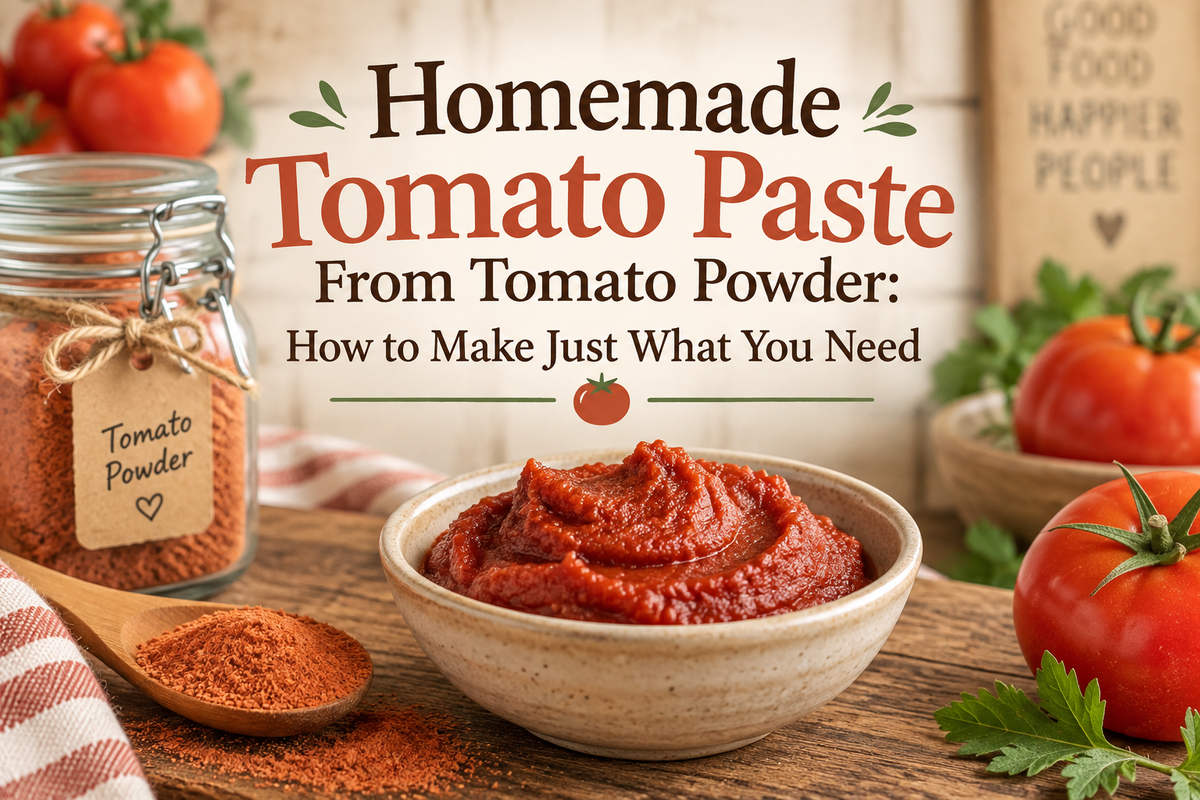
My morning started out innocently enough.
I was making tomato powder from my freeze-dried garden tomatoes. That's it. That was the plan.
Then I looked at that beautiful red powder sitting on my counter and decided to add a little water.
And somehow, we have now progressed to homemade tomato paste.
Was tomato paste on today's to-do list? Absolutely not.
But apparently when you own a freeze dryer, "I'm just going to do this one little thing" is the homesteading equivalent of walking into Costco for milk.
One thing leads to another.
The good news? This particular rabbit hole turned out to be pretty darn useful.
Making homemade tomato paste from tomato powder means I can make exactly as much tomato paste as I need, whether that's one tablespoon for a recipe or enough for a big pot of soup.
No opening an entire can to use two tablespoons. No little container of leftover tomato paste getting shoved behind the sour cream.
And no discovering three weeks later that said container has apparently started its own science experiment.
Just tomato powder, water, and about a minute of my time.
And in full transparency, I don't like the metallic taste that comes along with canned tomato paste, but maybe my taste buds are just over sensitive.
If you've been wondering how to make tomato paste from tomato powder, let me show you just how ridiculously simple it is.
Who This Guide Is For
This homemade tomato paste recipe is for you if:
- You grow more tomatoes than you know what to do with.
- You already make tomato powder from dehydrated or freeze-dried tomatoes.
- You're looking for more tomato powder uses.
- You hate opening a whole can of tomato paste when a recipe only calls for a tablespoon or two.
- You want a quick substitute for tomato paste you can mix up as needed.
- You love having homemade pantry staples ready to work when you need them.
Basically, if you've ever found a fuzzy little container of forgotten tomato paste hiding in the back of your refrigerator, pull up a chair.
You're among friends.
What Is Tomato Powder?
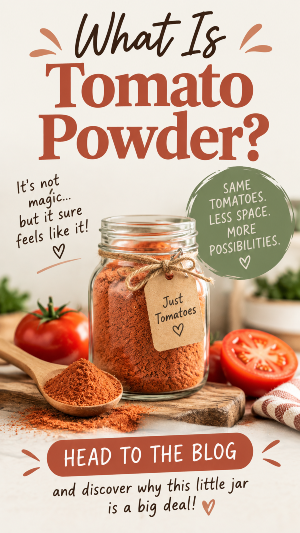
Tomato powder is pretty much exactly what it sounds like: tomatoes that have had their moisture removed and then been ground into a fine powder.
In my case, I make freeze-dried tomato powder from tomatoes I've preserved from the garden using my Harvest Right freeze dryer.
Once the tomatoes are completely freeze dried, they can be blended into a beautiful, intensely tomato-y powder that takes up a whole lot less pantry space than the tomatoes did when they started.
And that little jar of red powder is surprisingly useful.
Because you've removed the water rather than the tomato, adding water back in lets you turn that powder into different tomato products depending on how much liquid you use.
That means one pantry ingredient can become tomato paste, tomato sauce, or another tomato base depending on what you're cooking.
It can also be added dry to recipes when you want tomato flavor without adding more liquid.
That's when tomato powder starts earning its keep in my pantry.
Can You Make Tomato Paste From Tomato Powder?
Absolutely.
And this might be one of my favorite tomato powder uses simply because it's so convenient.
Tomato paste is essentially a very concentrated tomato product. Tomato powder has already had its moisture removed, so instead of spending hours cooking fresh tomatoes down until they're thick and concentrated, you're simply putting back enough water to create the consistency you want.
Mix the tomato powder and water.
Stir.
Tomato paste.
I almost feel silly calling that a recipe.
Almost.
But considering traditional homemade tomato paste can involve chopping tomatoes, cooking them down, straining them, and cooking them down even more, I'm willing to take this little shortcut and not apologize for it.
How to Make Homemade Tomato Paste From Tomato Powder
You only need two ingredients:
Tomato powder + water.
That's it.
Start by putting your tomato powder into a small bowl.
Add water gradually while stirring until the mixture reaches the thick, smooth consistency you expect from tomato paste.
Give it a minute to fully hydrate before deciding whether it needs more water. You can always add another splash, but once you've turned your tomato paste into tomato soup, there's no putting that horse back in the barn.
If it gets too thin, though, don't panic. Just stir in a little more tomato powder.
That's another thing I love about making tomato paste this way. It's incredibly forgiving.
That's it.
No simmering for hours.
No food mill.
No giant pile of tomatoes.
And most importantly, no half-empty can headed for the refrigerator.
Tomato Powder to Tomato Paste Ratio
Here's where I give you permission to use your eyeballs and your taste buds.
Different tomato powders can absorb water differently depending on the tomatoes and how the powder was prepared, so I prefer to treat the ratio as a starting point rather than a commandment written on a stone tablet.
A published UC Master Food Preserver reference for reconstituting dehydrated tomato powder uses 6 tablespoons tomato powder with 1/2 cup water to make approximately 6 ounces of tomato paste.
That's a helpful benchmark, but when I'm using my own freeze-dried tomato powder, I still add the water gradually and stop when the texture looks right.
For Small Amounts
If your recipe only needs a tablespoon or two of tomato paste, don't make six ounces just because you can.
Put a small amount of tomato powder in a bowl and add water a little at a time until you have the amount and consistency you need.
This is the whole beauty of keeping tomato powder in the pantry.
Need one tablespoon? Make one tablespoon.
Need half a cup? Make half a cup.
No tomato paste leftovers required.
Homemade vs. Store-Bought Tomato Paste
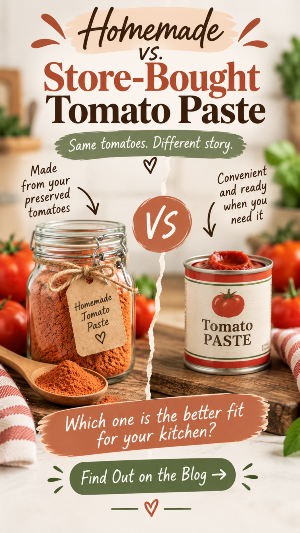
This was the part that got me curious in the first place.
I had my freshly mixed tomato paste sitting there looking ridiculously pretty, so naturally I started thinking about how it compared with the can of tomato paste I'd normally grab from the grocery store.
Here's the biggest difference.
My version is simply my tomato powder and water.
Some commercially prepared tomato pastes contain tomatoes and citric acid, while ingredient lists vary by brand.
Citric acid isn't something we need to make into a villain here. Acid plays an important role in food processing and preservation, particularly with canned tomato products.
For me, the advantage of my homemade version isn't about claiming that store-bought tomato paste is "bad."
It's about control and convenience.
Homemade vs. Store-Bought Tomato Paste
| Homemade From Tomato Powder | Store-Bought Tomato Paste | |
|---|---|---|
| Ingredients | Tomato powder + water | Varies by brand; often tomatoes and citric acid |
| Amount | Make exactly what you need | Sold in a fixed amount |
| Thickness | Easily adjusted with powder or water | Consistency is already determined |
| Before Use | Tomato powder stays dry until needed | Shelf stable until opened |
| Garden Harvest | Great way to use preserved garden tomatoes | Convenient ready-to-use option |
| Leftovers | None if you make only what you need | May leave extra when a recipe only needs a spoonful |
The Farm Girl advantage? Make what you need and leave the rest of the tomato powder happily sitting in the pantry. 🍅
And flavor? That's where your tomatoes get to have their moment.
The variety you grew, how ripe the tomatoes were, and how you preserved them can all affect the finished flavor of your tomato powder and paste.
There's something pretty satisfying about adding tomato paste to dinner and knowing those tomatoes started out in your own garden.
How Much Tomato Paste Should You Make?
My vote? Only what you need.
That's probably the single biggest reason I'll keep making tomato paste this way.
Recipes have an annoying habit of asking for amounts like:
1 tablespoon tomato paste.
Wonderful.
Now what am I supposed to do with the rest of the can?
Yes, you can portion and freeze leftover tomato paste, and that's a perfectly good solution.
But if tomato powder is already sitting in my pantry, I'd rather skip the leftover problem entirely.
Measure out enough powder for the amount you're likely to need, slowly add water, and stop when you have your desired amount.
Your tomato powder stays dry and ready for the next recipe.
No waste.
No forgotten container.
No tomato-based biology project behind the sour cream.
Everybody wins.
More Ways to Use Tomato Powder
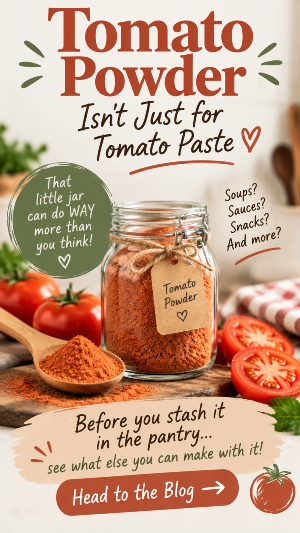
Once you have tomato powder in your pantry, homemade tomato paste is only the beginning.
This is one of those ingredients that makes you start looking around the kitchen thinking, "Okay, what ELSE can I put this in?"
Try tomato powder in:
- Soups and stews
- Chili
- Homemade pasta sauce
- Pizza sauce
- Taco meat
- Meatloaf
- Casseroles
- Dry seasoning blends
- Dips
- Rice dishes
- Homemade tomato sauce
- Recipes that need a little boost of concentrated tomato flavor
You can sprinkle the powder directly into dishes when extra liquid isn't needed, or reconstitute it first when you need the texture and moisture of a traditional tomato product.
This is why I love preserving ingredients instead of only preserving finished recipes.
One jar of tomato powder can become whatever dinner needs it to be.
How to Store Homemade Tomato Paste
This is important:
The tomato powder and the reconstituted tomato paste are two different things when it comes to storage.
Your properly dried tomato powder can be stored dry in an airtight container according to the storage method you use for your preserved foods.
But once you add water back to the powder, you've made a moist food again.
At that point, treat your homemade tomato paste as perishable.
My favorite approach is also the easiest:
Make only what you need and use it right away.
If you do have leftover reconstituted paste, refrigerate it promptly in a covered container and use it within a few days, or freeze small portions for later.
A Note About Canning This Tomato Paste
This quick tomato powder-and-water method is not a home-canning recipe.
Adding water to tomato powder and putting the resulting paste into a jar does not automatically make it shelf stable.
Safe home canning depends on tested ingredient proportions, acidity, jar size, processing method, processing time, and sometimes elevation adjustments.
If you want shelf-stable home-canned tomato paste, use a tested tomato paste recipe from a trusted home food preservation source rather than attempting to can this reconstituted version.
For everyday cooking, there's really no need anyway.
Keep the powder dry.
Mix the paste when you need it.
That's where this method shines.
Homemade Tomato Paste FAQs
Can you really make tomato paste from tomato powder?
Yes. Tomato powder can be reconstituted with water to create tomato paste. The amount of water determines the consistency of the finished product.
How do you turn tomato powder into tomato paste?
Mix tomato powder with water gradually until it reaches a thick, smooth tomato-paste consistency. Allow it a moment to hydrate and adjust with additional powder or water as needed.
Can tomato powder be used as a substitute for tomato paste?
Yes. Reconstituting tomato powder with a small amount of water makes an easy tomato paste substitute when a recipe calls for traditional paste.
Can I put tomato powder directly into a recipe instead?
Absolutely.
For soups, chili, stews, sauces, and similar recipes that already contain liquid, you may not need to reconstitute the tomato powder first.
Add a small amount directly to the recipe and adjust to taste.
Remember that tomato powder is concentrated. It's much easier to add more than to stand over your pot whispering, "Well... I've made a terrible mistake."
Does homemade tomato paste need citric acid?
Not when you're simply reconstituting tomato powder with water and using the paste immediately in your cooking.
Citric acid becomes a different conversation when we're talking about home canning and shelf-stable storage. Tested tomato canning recipes may require specific amounts of added acid for safety.
Don't add citric acid to this quick recipe with the assumption that doing so makes it safe for shelf storage. It doesn't replace a tested canning process.
Is homemade tomato paste healthier than store-bought?
I wouldn't make a blanket claim that homemade is automatically healthier.
Commercial tomato paste can have a very simple ingredient list, and citric acid itself isn't a reason to label a product unhealthy.
What I love about homemade tomato paste from my own tomato powder is knowing exactly what's in mine, being able to control the consistency, using tomatoes I've preserved myself, and making only as much as I need.
How long does homemade tomato paste last?
For this recipe, I prefer making only enough for the recipe I'm cooking and using it immediately.
Once water is added to dry tomato powder, don't treat the mixture as a shelf-stable product.
Can I make tomato sauce from tomato powder too?
Yes!
Add more water and your thick tomato paste begins moving toward tomato sauce
consistency.
That's one reason tomato powder is such a handy pantry ingredient. You're not storing only one finished tomato product. You're storing concentrated tomatoes that can be used several different ways.
Farm Girl Next Steps
If you've got tomatoes coming out of your ears at the end of garden season, don't overlook tomato powder.
It's compact.
It's versatile.
It helps preserve a garden harvest without filling another entire shelf with jars.
And apparently it can turn an innocent morning of making tomato powder into homemade tomato paste, a Facebook post, and an entire blog article.
Not that I know anyone who would do such a thing. 😂
From here, try using your tomato powder to make just enough paste for your next recipe. Then experiment with adding the powder directly to soups, sauces, chili, and other dishes where you want concentrated tomato flavor without additional liquid.
You may discover that little jar earns a permanent spot in your pantry.
Until Next Time
I started the morning making tomato powder.
I ended it writing about tomato paste. This is why I don't make plans anymore.
But if making my own tomato paste means I never again have to discover a suspicious little container hiding behind the sour cream, I'm calling this particular rabbit hole a win.
Until next time, keep growing it, preserving it, and seeing what happens when you add just a little water.
Homemade, heartfelt, and a little bit fun.


🍓 Let’s Stay Connected
If you love simple, homemade, from-scratch goodness, you’ll fit right in here.
I share freeze drying tips, zero waste kitchen ideas, and all the little farm girl fixin’s along the way 👩🏻🌾
💛 Join me on Facebook
🎥 Watch on YouTube
🌿 Follow along on TikTok
📌 Save ideas on Pinterest
🛒 Shop my Amazon favorites
✉️ Grab my free kitchen tips + join my list
Just a little heads up, friend...some of the links on this page may be affiliate links. That means if you grab something through them, I may earn a small commission (at no extra cost to you). It’s basically like you buying me a coffee while I share all my favorite cozy kitchen finds with you. I only ever recommend what I truly love and use myself.